Do Backlinks Still Matter for AEO? What Earns an AI Citation
Backlinks and AI citations aren't the same signal. Here's what Google's docs, a Princeton study, and Ahrefs data show, and what to do instead.
AEO structures your site so AI assistants such as ChatGPT, Perplexity and Google AI Overviews can quote it when customers ask who to call. Stand Up: ai search setup at build only. Growth: monthly ai search work at $649/mo.
Spec summary
Stand Up and Growth have fixed prices, so your bid is instant. Custom work is reviewed by Chris, who gets in touch to talk it through. See plans
Answer engine optimization (AEO) and generative engine optimization (GEO) describe the same practice. We use AEO because it names the outcome, getting cited as the answer, rather than the mechanism.
Where SEO aims for a ranked blue link, AEO aims for the passage an AI assistant quotes. The foundations overlap: clear headings, structured data and pages that answer one question well.
Stand Up: ai search setup at build only. Growth: monthly ai search work.
What Growth covers, grouped. Setup items go live at launch; the content and checks run every month.
There is no fixed date, and anyone who promises one is guessing. This is the order the work happens in.
Structured content, schema and AI crawler access go live with the site.
At launch, every plan
The monthly post is written and structured to be cited by AI answer engines, and the setup is maintained.
Every month on Growth
Plans from $199/mo, no setup fee.
AI search setup is part of every plan at launch. Monthly AI search work is part of Growth.
A few of the Stand Up sites we launched with schema and an AI search foundation.
All featured work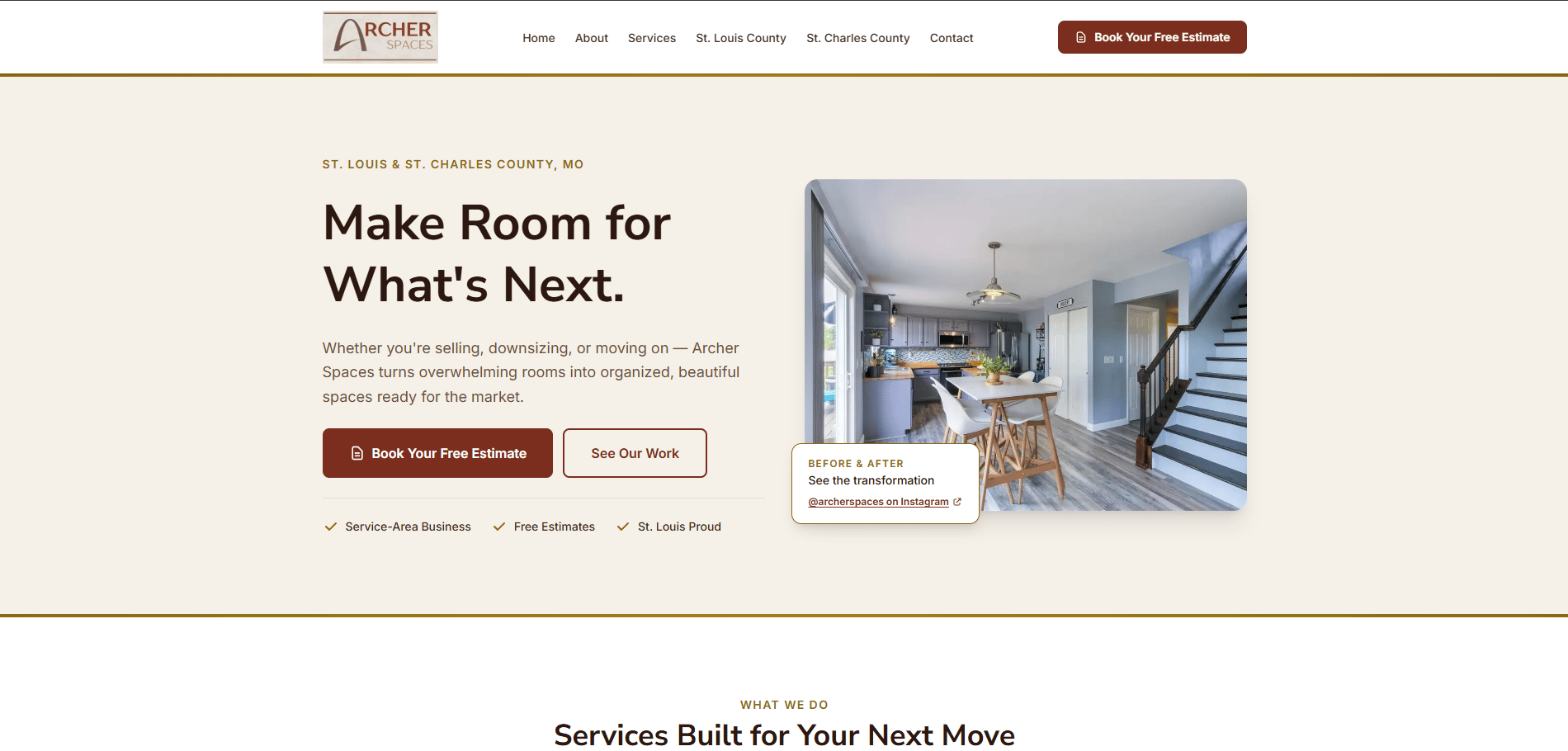
St. Charles & St. Louis County, MO
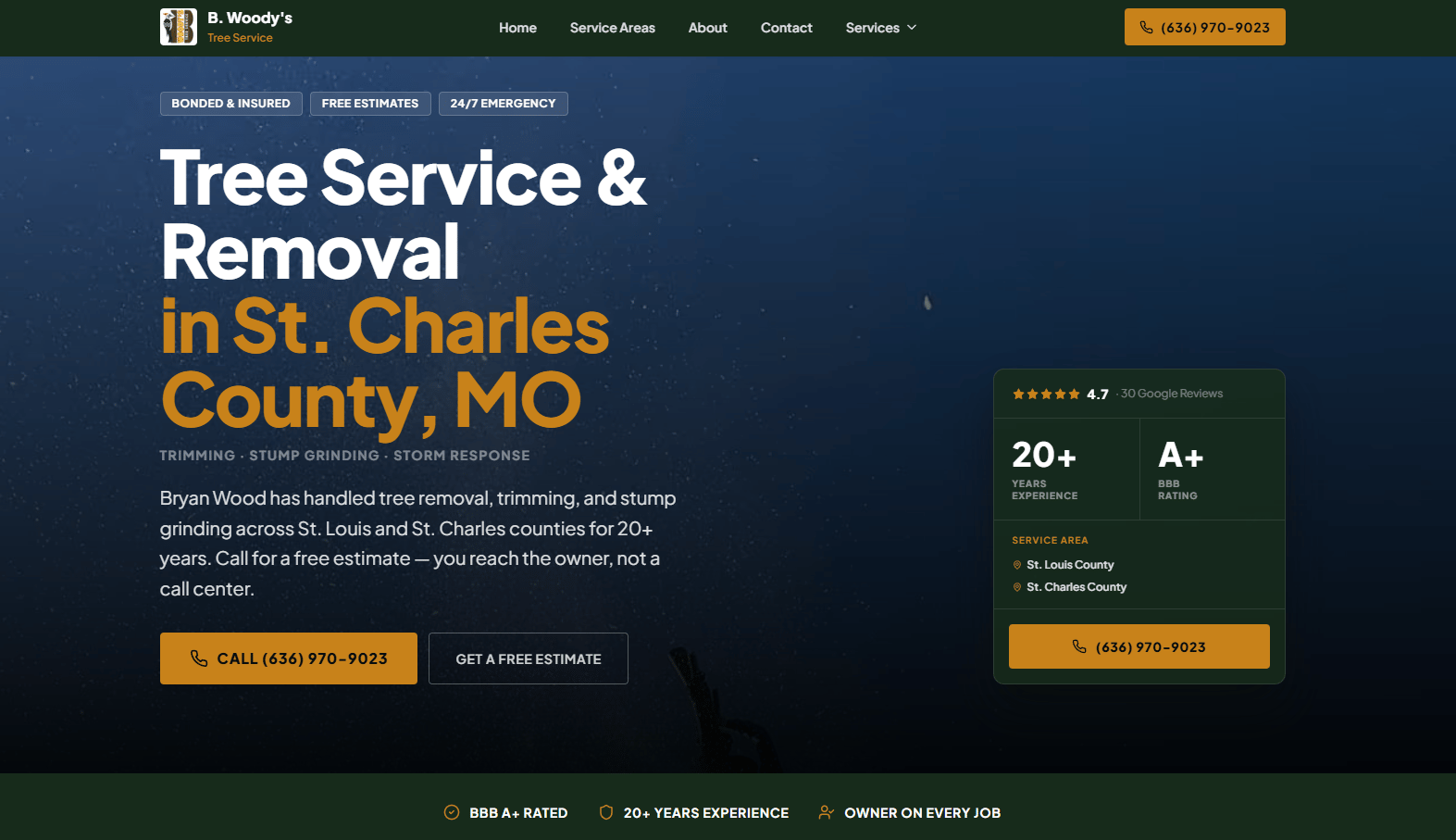
St. Charles, MO
Backlinks and AI citations aren't the same signal. Here's what Google's docs, a Princeton study, and Ahrefs data show, and what to do instead.
Answer engine optimization cost runs $1,500-$25,000+/month in 2026. What drives AEO pricing, what each tier includes, and how to spot a bad quote.
A percent-of-revenue framework for setting your 2026 SEO budget: how to split it across website, local SEO, and AEO, and what to cut first.
AI-assisted local search rose from 6% to 45% of consumers in one year (BrightLocal, 2026). Here's how to tell if your Ohio business needs AEO now or later.
Each county page is built answer-first, with LocalBusiness schema listing its ZIP codes and FAQ schema for county questions.
AEO structures your website so AI assistants such as ChatGPT, Perplexity, Claude and Google AI Overviews can cite your business as the answer to a question. Where SEO targets ranked links, AEO targets the extracted answer shown instead.
SEO optimizes for ranked positions in search results. AEO optimizes for being quoted in AI-generated answers. The foundations overlap (clear HTML, schema markup, author signals), and AEO adds answer-first formatting, FAQ schema and an llms.txt file that tells AI crawlers what your site covers.
AI search setup at build only on Stand Up: structured content, schema and AI crawler access set up at launch. No ongoing AI search work after launch. Monthly AI search work on Growth: the monthly post is written and structured to be cited by AI answer engines (ChatGPT, Perplexity, Google AI Overviews), and your AI search setup is maintained monthly.
There is no reliable timeline. AI tools change how they choose sources often, so we don't promise a date. The signals go live at launch; on Growth they are kept current every month and we tell you what we see.
AI assistants quote pages that answer the question clearly and can be trusted for it. A local business with a specific, well-structured answer about its own trade and towns can be the best source for a local question, whatever its size.
Answered by Chris Melson, Founder & CEO.
Pick a plan and the features you need, and see the price before the first call.
Stand Up and Growth have fixed prices, so your bid is instant. Custom work is reviewed by Chris, who gets in touch to talk it through.