What Is AEO and Why Midwest Businesses Need It in 2026
Answer Engine Optimization (AEO) is how your business gets cited by AI tools like ChatGPT, Perplexity, and Google's AI Overviews. Here's what it means for local businesses in the Midwest.

Chris Melson, Founder & CEO
, updated , 5 min read
In this guide
What Is AEO and Why Does It Matter for Your Business?
Answer Engine Optimization (AEO) is the practice of structuring your website so that AI-powered tools (ChatGPT, Perplexity, Google's AI Overviews, Gemini, and others) can accurately cite your business when users ask relevant questions. It's the fastest-growing channel in local search, and most small businesses in the Midwest have zero AEO infrastructure in place today.
That gap is an opportunity.
How AI Answer Engines Actually Work
Traditional search engines like Google match keywords to web pages and rank them. AI answer engines work differently: they synthesize information from multiple sources and produce a single, confident answer. When someone asks "who does the best web design in Columbus, Ohio," the AI isn't showing a list of links. It's writing a paragraph that names specific companies.
To get named, your business needs to give AI engines three things:
- Clear entity data: Who you are, what you do, where you do it, and how to reach you. This comes from consistent structured data (JSON-LD) across your website.
- Direct-answer content: When someone asks a question, your page should answer it in the first 50 words, not bury it in a wall of marketing copy.
- Authority signals: E-E-A-T: Experience, Expertise, Authoritativeness, Trustworthiness. AI engines favor businesses that demonstrate real credibility through bios, credentials, reviews, and consistent NAP (Name, Address, Phone) data.
What AEO Looks Like in Practice
Here's the difference between a page that ranks on Google and a page that gets cited by AI.
Traditional SEO page: A homepage with keyword-stuffed copy, a hero image, and a contact form. It ranks for "web design St. Louis" because it has the keywords in the title and body text.
AEO-optimized page: A homepage that injects LocalBusiness and Organization JSON-LD schema, opens with a direct 50-word answer paragraph, uses question-based headings ("What web design services do we offer in St. Louis?"), links to a detailed About page with Person schema for the founder, and has consistent NAP data across every page and every directory listing on the web.
The second page gets cited. The first one gets skipped.
Real-World Proof: AEO in Action
This is not a theory. Here is a live example of a site built with AEO principles being cited by Google's AI Overview for a competitive search term, appearing above every paid ad and every organic blue link on the page.
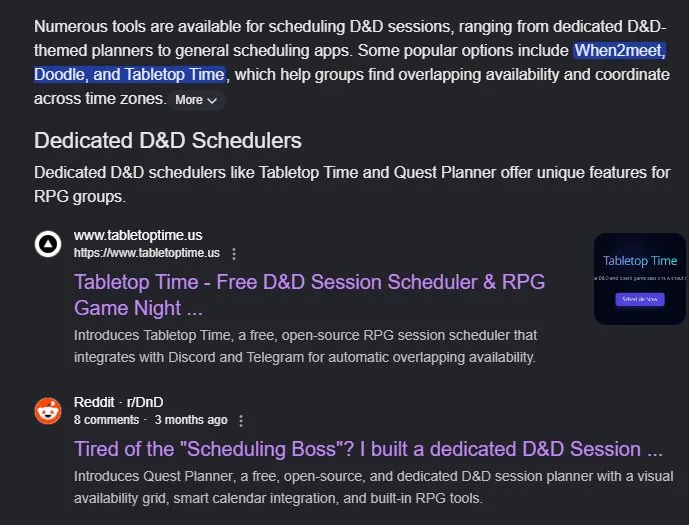
The site was structured with clear entity definitions, FAQ schema, and question-matched content, the same approach we build into every Untap Web site from day one. Google's AI read it, understood it, and cited it as the authoritative answer.
That is AEO working exactly as intended.
Why Midwest Markets Are Especially Underserved
Large metro markets (New York, Los Angeles, San Francisco) have high AI search competition. Every business has a digital agency optimizing their AEO. But in Midwest markets like Kansas City, Omaha, Indianapolis, and Wichita, the bar is dramatically lower.
Most local businesses in these markets have:
- No JSON-LD structured data
- WordPress sites that score 40-50 on Google's performance tests
- Inconsistent NAP data across directories
- No FAQ schema, no author schema, no breadcrumb schema
That's why we built Untap Web specifically for Midwest businesses. We bring enterprise-grade AEO infrastructure, the same techniques used by Fortune 500 companies, to local service businesses at a subscription price that makes sense.
The 5 Steps to Get Started with AEO
Getting your business AEO-ready doesn't require a complete site rebuild. It requires systematic implementation of the right technical infrastructure:
1. Add JSON-LD Structured Data to Every Page
Every page on your site should inject valid JSON-LD schema that tells AI engines what your business is. At minimum, your homepage needs Organization or LocalBusiness schema with your name, address, phone, hours, services, and social profiles. Service pages need Offer schema. FAQ pages need FAQPage schema.
2. Format Content with Direct-Answer Paragraphs
Under every heading, write a 40-60 word paragraph that directly answers the implied question before elaborating. AI engines pull these "answer-first" paragraphs verbatim. Buried answers don't get cited.
3. Use Natural-Language Question Headings
Instead of "Our Services," write "What web design services do we offer for small businesses in St. Louis?" AI engines match these headings to user queries far more effectively than generic labels.
4. Build Entity Consistency Across Every Platform
Your business name, address, phone number, and description must be identical on your website, Google Business Profile, Yelp, Bing Places, Apple Maps, and every other directory. AI engines cross-reference these sources to validate entity data. Inconsistencies reduce confidence in your business as a trustworthy citation source.
5. Establish E-E-A-T Signals Through Author Bios and Credentials
AI engines heavily weight E-E-A-T when choosing which sources to cite. This means publishing detailed author bios with professional credentials, linking your About page to a Person schema entity, earning and responding to reviews, and demonstrating real-world expertise through blog content that answers specific industry questions.
Go Deeper on AEO
Once you've got the fundamentals down, these guides cover specific angles in more depth:
- The difference between SEO and AEO, for the two disciplines compared side by side
- Why we call it AEO instead of GEO, for the terminology debate and why the framing matters for small businesses
- How AI search handles "near me" queries, for the local-specific signals AI engines weigh
- A full AEO checklist for service businesses, for a step-by-step technical, content, and entity checklist
- A practical AEO playbook for small businesses, for a week-by-week implementation plan
- How AEO and local SEO work together, for the shared signals that lift both channels at once
The Bottom Line
SEO gets you found on Google. AEO gets you recommended by AI. In 2026, you need both, but most Midwest businesses have neither fully implemented.
The businesses that invest in AEO infrastructure now will have a significant head start as AI search adoption continues to accelerate. The ones that wait will spend the next three years trying to catch up.
If you're ready to get your business AEO-ready, get your free bid. We'll analyze your current site, identify the gaps, and show you exactly what it would take to get cited by ChatGPT, Perplexity, and Google's AI Overviews.
Questions
What is Answer Engine Optimization (AEO)?
AEO is the practice of structuring your website content and technical markup so that AI-powered answer engines (like ChatGPT, Perplexity, Google's AI Overviews, and Gemini) can accurately cite your business when users ask relevant questions. It goes beyond traditional keyword SEO to focus on entity clarity, structured data, and direct-answer formatting.
How is AEO different from traditional SEO?
Traditional SEO optimizes for ranked blue links in search results. AEO optimizes for cited answers in AI-generated responses. SEO asks 'can Google find me?' AEO asks 'will ChatGPT recommend me?' Both matter in 2026, but AEO is the faster-growing channel as AI search adoption accelerates.
Do Midwest local businesses need AEO?
Yes. Nearly half of consumers (45%) now use AI tools to find local business recommendations, and that number is growing quickly in mid-sized Midwest markets. If a potential customer in Columbus or Wichita asks an AI assistant 'who is the best web designer near me,' your business needs AEO infrastructure to appear in that answer.
Sources
Next step
AI search visibility (AEO)
Your business named when customers ask ChatGPT, Perplexity or Google AI Overviews who to call. Stand Up and Growth have fixed prices, so your bid is instant. Custom work is reviewed by Chris, who gets in touch to talk it through.